RECYCLING magazine
  • Subscribe
  • Log in
    • en
    • de
  • Markets & Industries
  • Politics & Law
  • Science & Technology
  • Magazine

Market & Industries

This section highlights price developments for secondary raw materials, investments, corporate strategies, and new plant locations. We also provide an economic assessment of international market trends and demand developments.
  • Market22 Apr 26

    Adapt to dynamics

    No one has been talking about Germany as a recycling world champion for a long time. But the question still arises as to where Germany is positioned in the circular economy in an international comparison. On the basis of patent applications, Prognos tried to answer this question on behalf of the Bertelsmann Stiftung with the study "Innovation Analysis of the Circular Economy".

  • Market22 Apr 26

    Recycling is not enough

    The expansion of electromobility shifts industrial value creation towards batteries and critical raw materials such as lithium, nickel, cobalt and graphite, which are becoming strategic resources. Electric vehicles require significantly more mineral raw materials than combustion engines, which increases cost risks as well as environmental and social challenges in global supply chains. As a result, the previously linear battery value chain is reaching its limits. Recycling is an important solution component, but cannot cover the increasing demand for materials in the short term alone. The Ellen MacArthur Foundation's report "Leading the charge: Turning risk into reward with a circular economy for EV batteries and critical materials" shows that a systemic approach is needed that combines recycling with battery design, use, secondary use and new business models.

  • Market22 Apr 26

    From residual material to key resource

    Biogenic waste and residues are becoming increasingly important in the course of the transformation towards a climate-neutral circular economy. The report "Recycling of Biogenic Waste and Residues - Carbon Source, Bioenergy & Negative Emissions" by the German Biomass Research Center examines current developments, technological approaches and political framework conditions along the material and energetic recycling of biogenic residues and shows what role waste and recycling management will play in defossilization, resource efficiency and a circular bioeconomy in the future. The report was published in "Austrian Water and Waste Management".

22 April 2026

  • Market22 Apr 26

    Regional energy instead of imported gases

    Biogas is often underestimated in the energy policy debate or treated as an obsolete model. However, the study "Future Prospects of the Biogas Industry", which was prepared by the Institute for Future Energy and Material Flow Systems on behalf of the German Biogas Association, shows that as an energy and carbon carrier from residues and waste materials, biogas can make a key contribution to the energy transition and the circular economy.

  • Market22 Apr 26

    No people, no circular economy

    The transformation to a circular economy poses far-reaching challenges for industry, educational institutions and policymakers. The chemical industry and materials science in particular play a central role in this: they create the technological and scientific prerequisites for using materials more efficiently, making products more durable and closing material cycles. The report "Jobs and skills for a circular economy: a cross-sector perspective from the chemical and materials science and engineering communities" summarises key findings from a joint study by the Institution of Chemical Engineers (IChemE), the Institute of Materials, Minerals and Mining (IOM3) and the Royal Society of Chemistry (RSC). The focus is on changes in the need for skills, the demands on educational pathways, difficulties in recruiting skilled workers and the political options for action.

  • Market22 Apr 26

    More use, less emissions

    The production of information and communication technologies generates high levels of greenhouse gas emissions, while the useful life of many devices is becoming ever shorter. The study "Greenhouse Gas Savings through the Reuse of Selected ICT Devices" conducted by Fraunhofer Umsicht uses a life cycle analysis to investigate the extent to which the reuse and refurbishment of smartphones, tablets, laptops and desktop PCs can contribute to reducing these emissions.

  • Market22 Apr 26

    Hidden paths of e-waste

    The increasing quantities of waste electrical and electronic equipment are posing considerable challenges for policy-makers, businesses and waste management systems worldwide. An effective circular economy requires that both formal and informal material flows are transparently recorded and quantified. Using the Netherlands as an example, the study "Improving WEEE monitoring: insights from the Netherlands" conducted by Dutch scientists analyses how an almost closed monitoring system for WEEE can be established, which data gaps still exist, and which measures are suitable to improve the recording of informal flows in the future. The study was published in the journal "Resources, Conservation & Recycling".

  • Market22 Apr 26

    Cooperation instead of disruption

    Japan is considered a recycling pioneer with a high level of technical competence and a pronounced sense of efficiency. But how is the circular economy model developing there beyond conventional recycling? The study "Circular business models in Japan: Analysis of circular business transformation through an institutional approach" conducted by researchers from the Netherlands and Japan shows that the transformation is less disruptive and more cooperative. The study was published in the journal "Sustainable Production and Consumption".

  • Market22 Apr 26

    From linear risk to circular resilience

    Global supply chains are faltering, commodity prices are fluctuating wildly and regulatory requirements are becoming continuously tighter. Under these conditions, linear business models based on constant resource consumption and short product cycles are increasingly becoming an economic risk. The report "Mitigating linear risks" published by Circle Economy shows that circular strategies have long since ceased to be just a sustainability issue, but are becoming a key instrument of risk management.

  • Market22 Apr 26

    The long road to the closed loop

    Flexible plastic packaging is material-efficient, functional and market-forming, but also technically demanding and economically difficult to recycle. More than half of all plastic packaging is now accounted for by flexible applications, but closed material cycles have so far been the exception. The report "The challenges and solutions for flexible plastic packaging waste" by the "Alliance to end plastic waste" shows which technological, infrastructural and regulatory requirements need to be met in order for problem streams to become resilient value streams.

  • Market22 Apr 26

    Circular Economy fails due to structures

    The circular economy for plastics is politically set, technologically advanced and socially accepted, and yet its success remains limited. There is a structural gap between ambitious targets and the operational reality of the waste management and recycling industry. The article "Decoding the barriers for a circular plastics industry: An equation framework" by a Swedish scientist shows why known barriers have not yet been overcome, why individual measures come to nothing and which systemic prerequisites must be met for plastics cycles to actually work. The article was published in the journal "Sustainable production and consumption".

  • Wood22 Apr 26

    Waste wood recycling and gasification

    The gasification of residual forestry waste, recycled waste wood, MSW and ligno-cellulosic crop wastes is an emerging pathway to producing liquid fuels. At the high temperatures and pressures in the gasifier, these feedstocks are converted into syngas, a mixture of hydrogen, carbon monoxide and carbon dioxide. Subsequently, the syngas can be converted to methanol or synthetic Fischer Tropsch liquids such as sustainable aviation fuel (SAF). The handling of these non-homogeneous, solid materials is critical to the successful operation of the gasifier to enable a viable recovery and chemical recycling (chemcycling) pathway.

  • Market22 Apr 26

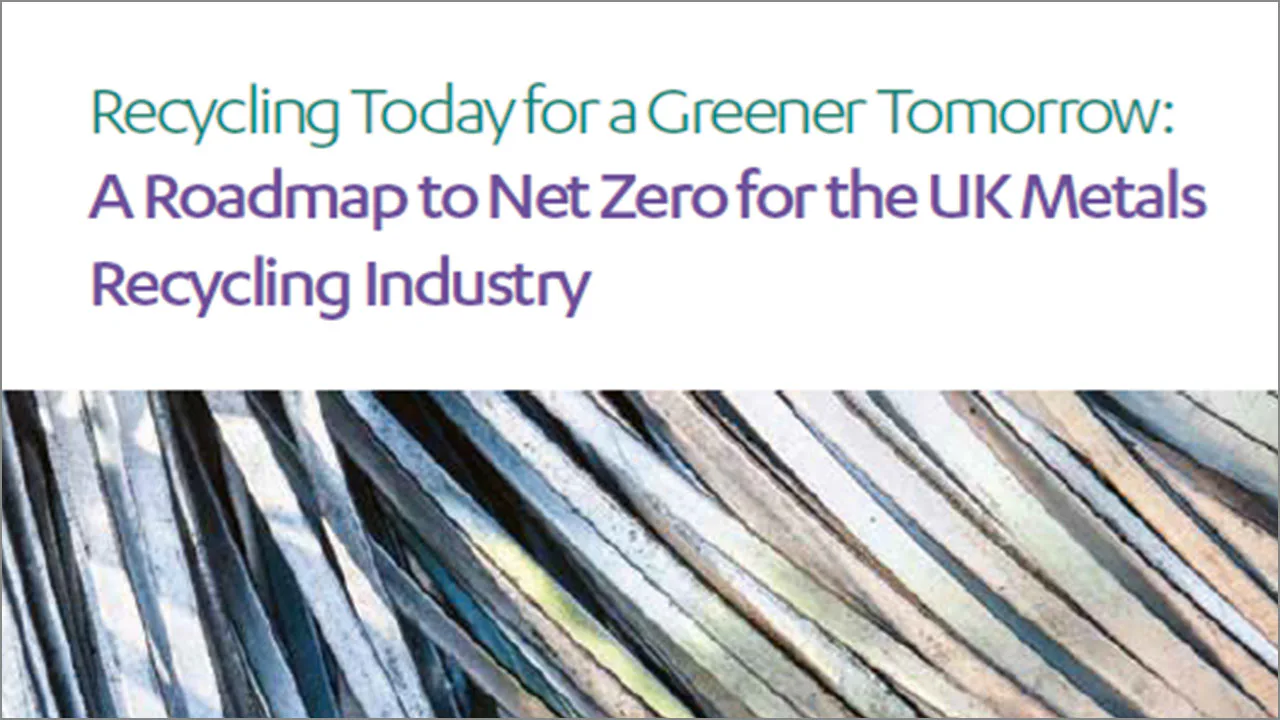
    Recycling strengthens location and climate targets

    The decarbonisation of industry is decisive for the competitiveness of entire economies. While energy-intensive primary industries are under high pressure to transform, the British Metals Recycling Association's report "Recycling Today for a Greener Tomorrow: a Roadmap to Net Zero for the UK Metals Recycling Industry" shows that the country's metals recycling sector can be a strategic lever for a climate-neutral industrial policy.

9 April 2026

  • Market9 Apr 26

    Deposit or garbage?

    Today's economy predominantly follows a linear model that consumes and disposes of resources. The circular economy counters this with a model that keeps materials in the cycle for as long as possible. One key to this is deposit systems, which promote the return of packaging through monetary incentives. While they are established in many European countries, the focus of research is mostly on households. On the other hand, the role of companies, especially in the horeca sector, has been little investigated, although there is great potential for resource conservation here. In practice, however, deposit packaging is often not returned. Successful recycling therefore depends both on the behaviour of consumers and on the design of the collection structures. Against this background, the study "Motivating recycling behaviour: The role of deposit return systems and collection point design" by two Dutch scientists examines how guests in a university cafeteria can be motivated to recycle correctly through nudging, prompting and the design of sustainable collection points. The study was published in "Cleaner Waste Systems".

25 March 2026

  • Market25 Mar 26

    Six measures for better recycling

    WEEE is a source of annoyance: the quantities are constantly increasing, the already complex recycling is made more difficult by design developments and every new battery threatens to fire. Therefore, in the "EU Recyclers' Roadmap: For a circular & future-proof e-waste sector", Recycling Europe proposes six measures to improve things.

  • Market25 Mar 26

    The long road to plastic circularity

    The automotive industry is at the heart of Europe's efforts to close resource cy-cles and drive the transition to a circular economy. The study "Increasing plastic circularity in the automotive sector: Supply chain analysis and policy options from the European Union (EU)" by scientists from Italy and the Netherlands examined plastic circularity in the automotive sector. In doing so, it focuses on the drivers and hurdles of recycling. The study was published in "Resources, Conservation & Recycling".

  • Market25 Mar 26

    Transparency without territory

    Digital product passports are considered a key tool for promoting transparency, sustainability and circular economy in global value chains. Especially in the area of critical raw materials for batteries, they are intended to overcome regulatory fragmentation and provide reliable infor-mation on origin, processing and reuse. However, their cross-border implementation raises considerable legal questions. The white paper "Digital Product Passports and Critical Raw Ma-terials for Batteries: Legal Conflicts and Principles for Cross-Border Cooperation" by UNECE analyzes the central legal conflict areas in the implementation of digital product passports in global CRM battery value chains and develops principles for an internationally coordinated legal framework.

  • Market25 Mar 26

    Efficiency through algorithms

    The circular economy is facing a technological turning point. Increasing material flow volumes, more demanding material composites and ambitious recycling targets require new solutions beyond classic process optimization. Artificial intelligence is evolving from a promise of innovation to an operational tool - in sorting systems, logistics systems and already in product design. The study "Leveraging artificial intelligence for economic development: Innovations in Circular Economy and waste reduction strategies" by scientists from Uzbekistan shows how data-based technologies are transforming the waste management and recycling industry, which economic and ecological effects are realistic and which strategic prerequisites must be met for successful implementation.

  • Subscribe
  • Newsletter
  • Contact

Legal Informations

  • Legal notice
  • Privacy policy
  • Terms and conditions
  • Cancellation

RECYCLING magazine

  • Our Team
  • About us
  • Newsletter
  • FAQs

Quicklinks

  • Subscriptions
  • Mediakit

RECYCLING magazine provides independent, deeply investigated information about all aspects of secondary raw materials.
The magazine has a long track record, it has a history of more than 70 years. The following terms and conditions apply to the use of this website: Terms and Conditions, Privacy Policy and Cookie Policy.